
African Coffee Connect: connect with extraordinary African coffee farmers.
Democratic Republic of Congo
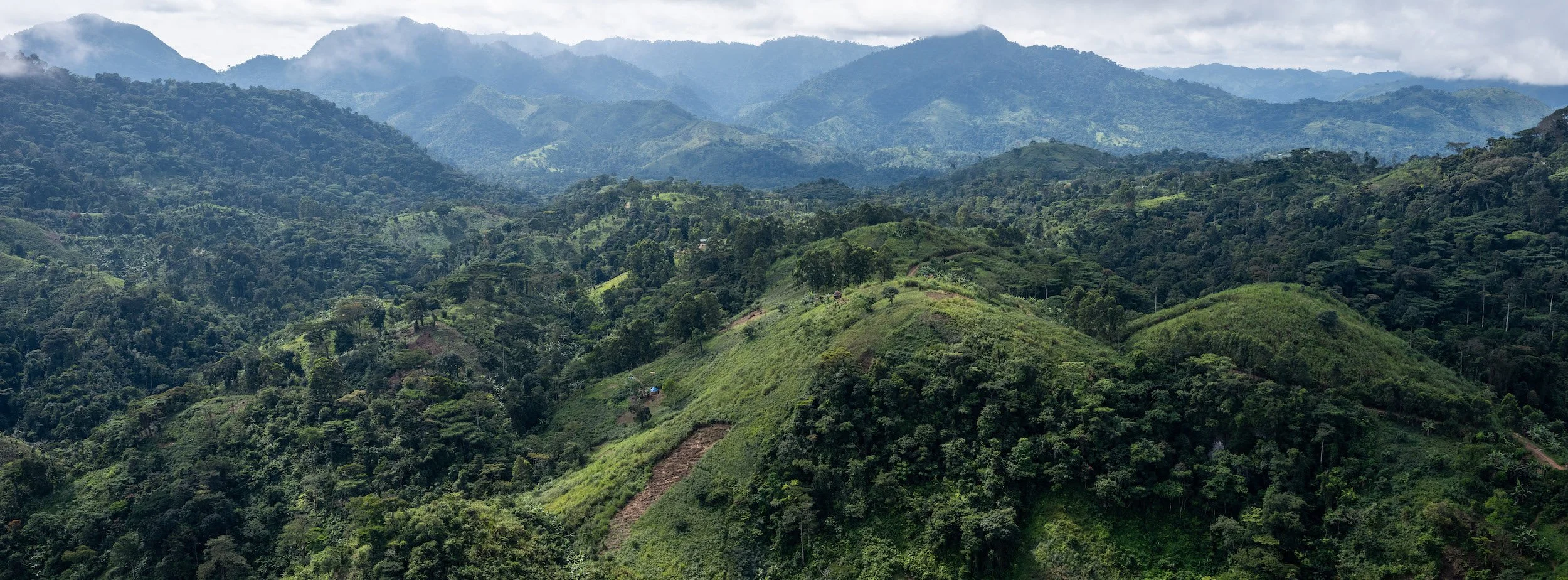
Eastern DRCongo is one of the most extraordinary, and until very recently least known, coffee landscapes in the world. Arabica coffee is grown by small holder farmers on the mountains and shores of the Great Lakes from Ituri in the north to Lake Tanganyika in the south, with most production along Lake Kivu, Lake Edward and on the slopes of the Rwenzori mountains. But for a whole generation, from the late 1980s to the late 2000s, Eastern DRCongo’s coffee disappeared from world markets as infrastructure and formal export routes collapsed.
Eastern DRCongo’s coffee revival started from 2008 to 2012 when Richard Hide from UK trade development organisation Twin and Twin Trading met and then travelled to visit members of a young cooperative called Sopacdi, and struck up a partnership to start to rebuild coffee production from the ground up. From the outset it was clear that the challenges were enormous, but equally that the potential to produce coffees in sustainable ways that could transform the lives of farmers and communities, and start to build peace and stability in a very troubled region, was unparalleled. In the ensuing years we have seen that the scale of the challenges has been fully matched by the dynamism and determination of coffee cooperative leaders and their partners.
Today right across Eastern Congo’s coffee belt there are grass roots cooperatives with the leadership, infrastructure, know-how and certifications to supply some of the finest coffees in Africa, and their experience is growing all the time. Twelve of these cooperatives decided in January 2023 to affiliate with African Coffee Connect.
Operating in Eastern Congo presents cooperatives with a distinct set of challenges. Local infrastructure is very poor and the coffee mills are more than 1,600 kilometers and two land borders from the ocean port of Mombasa. Insecurity is a perennial issue, with armed groups operating across large parts of the region, causing displacement and subjecting coffee farming communities to unspeakable violence. And while the terrain and climate are ideally suited to producing fine coffees, the natural environment is fragile and subject to the ravages of extreme weather caused by climate change.
Remarkably, the farmers and the cooperatives carry on working undaunted. And along with their concerns to build livelihoods, peace and stability, they are also very much aware of their proximity to Virunga National Park and Kahuzi Beiga National Park, homes to nationally and internationally important flora and fauna, including mountain gorillas and Grauer’s gorillas. They are working actively with partners including Virunga National Park and Farm Africa to develop major agroforestry programmes to safeguard the future for their communities and the precious natural environment.
Cooperatives per region
Click to discover our cooperative’s partners


Crop & export periods
Le Grand Nord

Lake Kivu

Involving women at every level of the coffee business

Marcelline Budza, founder and president of RWH - Picture by Glody Murhabazi
Women in Eastern Congo are marginalised and subjected to gender based violence.
The cooperatives affiliated to African Coffee Connect are working to address this in several ways.
Leadership
Currently the presidents of three cooperatives and the vice president of another are women. A number of washing stations are managed by women, and there are a number of women with other senior technical roles, including agronomists.
Growing and selling coffee
Women’s access to land is traditionally severely curtailed. Despite the fact that they do the large majority of the work, it is usually the men who deliver the coffee to the co-operative and receive the payment. The co-operatives now encourage their male members to gift a portion of their farm to their wives, who can then both manage the trees and sell their own coffees.
In the case of Muungano and Coopade, some of these coffees are processed separately in the washing stations and then marketed as coffees grown by women.
Household
At household level a number of cooperatives run GALS (Gender Active Learning System) progammes, a practical and highly effective approach to developing gender equality.
Women’s economic empowerment programmes
Two cooperatives, Rebuild Women’s Hope and Muungano, run women’s economic empowerment programmes. These start with literacy and numeracy courses, as many women have received little or no education, and move on to business skills training including tailoring, market gardening, baking and soap making.
Healthcare
Access to healthcare, in particular maternity services, is inadequate or completely lacking in the communities. In response, two coops, RWH and Muungano have embarked on initiatives and run maternity and basic healthcare clinics for the community, funded by coffee buying partners and by Fairtrade premiums.

Women farmers, from the KACCO cooperative

Mali Chokoro, manager of the Bosa Washing station, at RWH - Picture by Glody Murhabazi

Dr. Léopold Mupenda, head of Matumaini hospital built by Rebuild Women’s Hope - Picture by Glody Murhabazi
GALSatScale https://www.galsatscale.net/